Can you imagine the Christian community today trying to get together “under the guidance of the Holy Spirit” to agree on a biblical canon of the Scriptures?
We would not have a Bible today if not for the unity of the early Church which held together despite multiple heresies that were popping up in and around the early Church. The canon of the Bible was a gradual process taking place over the first four centuries through Church councils, and the guidance of the early Church Fathers.
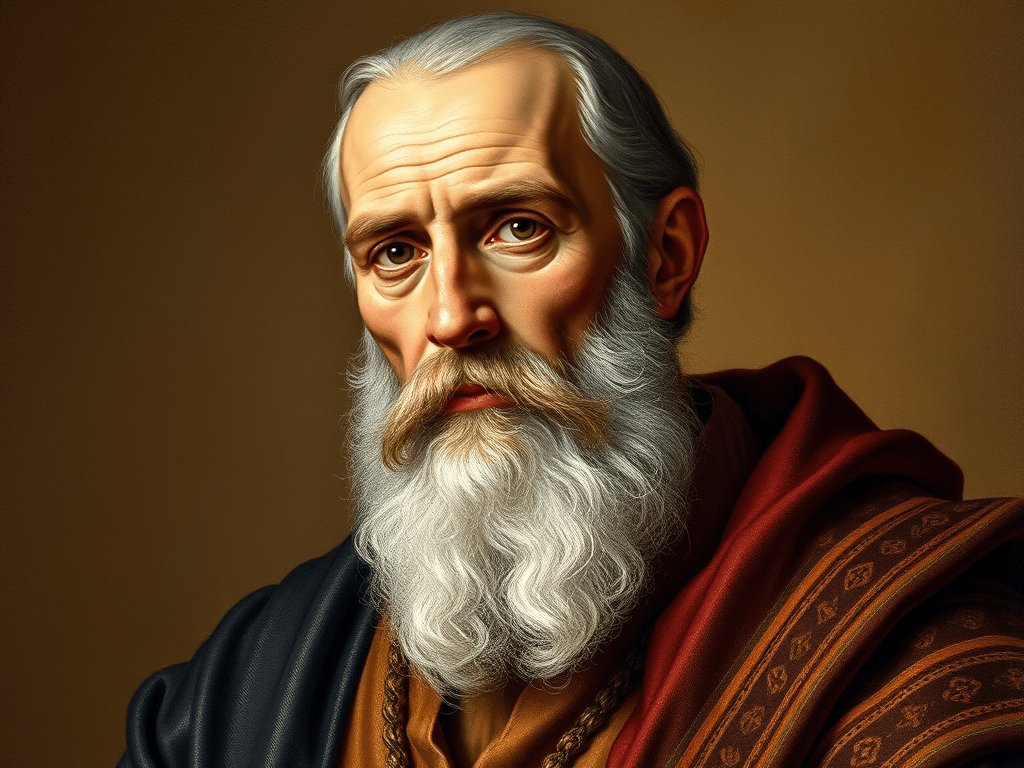
Last Friday was the commemorative feast day for Ignatius of Antioch. One of the most prominent of the Church Fathers and important Christian theologians of the last 2000 years, Ignatius was the third bishop of the Church of Antioch, a contemporary of the apostles, a disciple of the apostle John, who received the scriptures directly from the apostles themselves. Antioch is where they were first called Christians in Acts 11.
On his way to martyrdom in Rome in 107 A.D., he wrote seven letters preserving one of the earliest and clearest articulations of how the apostolic Church was meant to be ordered, governed, and united.
1. The Centrality of the Bishop
Ignatius emphasized that each local church must be united around a single bishop who presides in place of God, assisted by presbyters (priests) and deacons.
“Where the bishop appears, there let the people be, just as where Christ Jesus is, there is the Catholic Church.” (Smyrnaeans 8:2)
2. Unity in Faith and Obedience
He warned strongly against division and schism:
“Do nothing without the bishop. Keep your body as the temple of God. Love unity; flee from divisions.” (Philadelphians 3)
For Ignatius, unity with the bishop was equivalent to unity with Christ and the apostolic faith.
This blueprint became the early model for ecclesial unity that would be expressed in the early church concept of communion with the bishop of Rome.
3. The Eucharist as the Real Presence of Christ
Ignatius spoke of the Eucharist as “the flesh of our Savior Jesus Christ” (Smyrnaeans 7:1), rejecting those who denied this reality.
He taught that the Eucharist and the bishop’s authority were inseparable:
“Let that be considered a valid Eucharist which is celebrated by the bishop, or by one whom he appoints.”
Thus, the Eucharist became both the sign of unity and the heart of the Church’s sacramental life, articulating the understanding of the Mass. The altar with the bread (body) and wine (blood) was the central focus of Christian worship and united Christians everywhere.
4. The Use of the Word “Catholic.”
Ignatius gave us the earliest recorded use of the term “Catholic Church” used to distinguish the universal church from the heretical sects that were popping up.
“Wherever Jesus Christ is, there is the Catholic Church.”
By “Catholic” (Greek katholikos = universal), he meant the Church in full communion with the apostolic bishops—universal in faith, worship, and unity, not a loose federation of believers.
5. Apostolic Continuity and Martyrdom
Ignatius saw himself as a successor to the apostles through episcopal ordination and viewed martyrdom as the ultimate imitation of Christ. His theology of the bishop ensured the continuity of apostolic teaching—a living tradition rather than a merely written one.
6. The Church as a Visible, Hierarchical Body
Ignatius rejected early heresies and insisted that the Church is not invisible or purely spiritual but visible, structured, and sacramental—with ordained leaders, liturgy, and authority derived from Christ through the apostles.
Ignatius could’ve gone to his horrific death, feeling sorry for himself, kicking and screaming. But instead he took time to articulate a vision built upon that which he received from the apostles, which became the foundation for Church doctrine for the last 2000 years.
 Echoes of the Fathers